The IFTA mistakes that trigger an audit
IFTA filing deadlines Canada: the quarterly calendar, and the record-keeping failures that trigger an audit.

IFTA is the one filing where the paperwork and the money are the same document. Every quarter a carrier tells its base jurisdiction how far it drove in each member state and province, and how much fuel it burned inside each one. The gap between distance and fuel gets settled in tax, either paid or refunded. The IFTA filing deadlines Canada carriers run against are fixed and public, which is exactly why a missed one is hard to defend. Miss the date and you are not filing a form badly. You are filing a tax return badly.
The IFTA filing deadlines Canada sets each quarter
Every member jurisdiction files on the same calendar. A quarter's return is due the last day of the following month. First quarter lands in April. Second in July. Third in October. Fourth in January.
One return covers every jurisdiction you ran in during the quarter. You file it with your base jurisdiction, which is where the carrier is registered, not where the truck happens to be parked. Nobody files province by province.
Canada's side of the agreement is the provinces. Every province is a member. The territories are not. A run to Whitehorse or Yellowknife does not belong on an IFTA return, and forcing it there muddies the distance totals an auditor will rebuild from scratch. The member states south of the border sit in the same agreement, which is why a lane from Ontario to Texas is one filing, not two tax systems.
IFTA runs on a simple trade. Every jurisdiction charges tax on the fuel you burn inside it. You buy fuel wherever it is cheapest or most convenient, so the tax you paid and the tax you owe rarely line up. The return settles the difference. You report litres purchased by jurisdiction and distance run by jurisdiction, apply each jurisdiction's rate to its share of your fuel, and the clearing house moves the money. Some jurisdictions collect a payment. Some send a refund. The whole thing rests on two records agreeing. Where you bought. Where you drove.
Where the audits actually start
An IFTA audit is not a search for fraud. It is a reconciliation, and it fails on the same handful of habits every time.
Fuel receipts without the IFTA licence number are weak paper. The number ties the purchase to the fleet. Without it, an auditor holds a litre count and no owner.
Missing jurisdictions are the classic finding. A driver dips into one province for forty minutes, buys nothing, and never logs it. The return shows no distance there. The auditor's map shows otherwise. One gap becomes a question about every gap.
Co-mingled purchases cause quiet damage. Fuel for the reefer, fuel for a pickup, fuel bought on the card for a truck outside the fleet. It all lands in one litres total and inflates the tax you claim you already paid.
Then there is retention. Records have to survive the whole audit window, which runs years back, not quarters. A carrier who shreds fuel slips at year end has nothing to defend with when the sample window reaches further back than the filing cabinet does.

Current commercial wait times at CBSA-reported crossings.
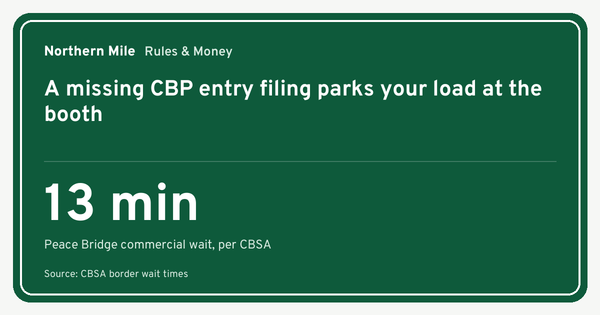
Every minute a truck sits at a crossing is a minute its distance log and its fuel log have to be reconciled later. The delays are concentrated right now. Peace Bridge is running 13 minutes, Queenston-Lewiston 7, and Pacific Highway 5. Ambassador Bridge, Blue Water, Lacolle, Coutts-Sweetgrass and Emerson-Pembina are clear. A clear crossing is not a green light to skip the log. It is the cheapest day to write it properly.
What the tax you already paid is worth
Here is why the reporting matters more than it looks. The price on the pump sign already contains fuel tax, and that tax is not the same anywhere.
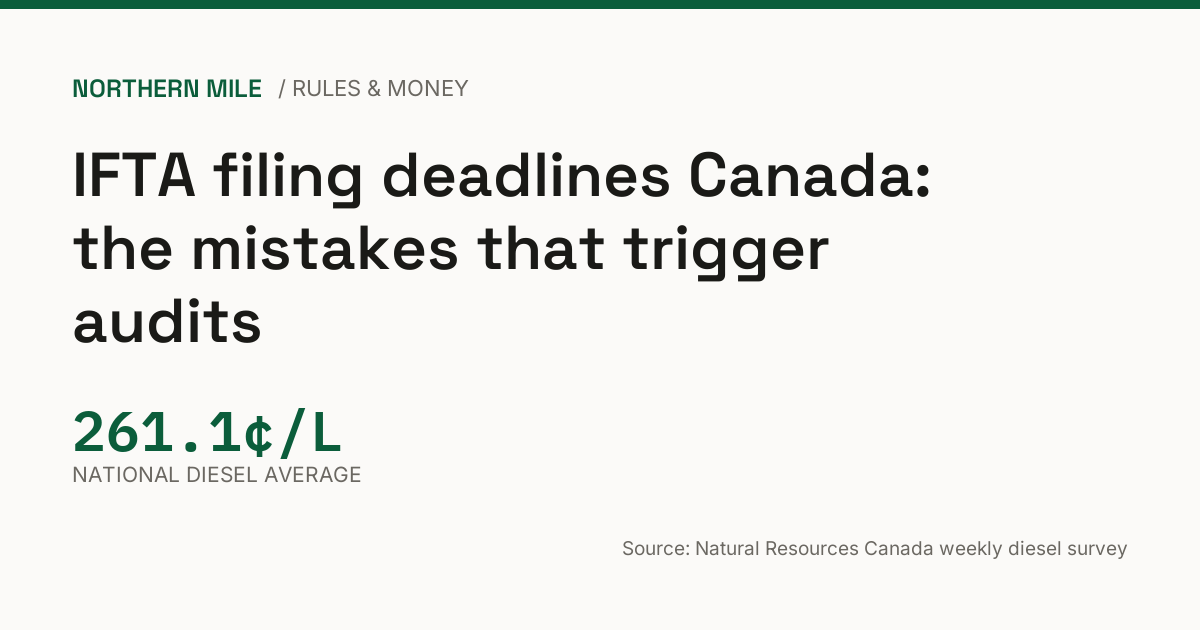
The national average is 261.1 cents a litre this week, on Natural Resources Canada's weekly survey. Quebec sits at the top at 291.6. The Northwest Territories sits at the bottom at 223.8. That is a spread of 67.8 cents a litre, and it tells IFTA filers something worth noticing. The cheapest market in the country is a territory, and territories are not IFTA jurisdictions. The cheapest fuel in the brief is also the easiest to record badly, because it never shows up on the return at all.
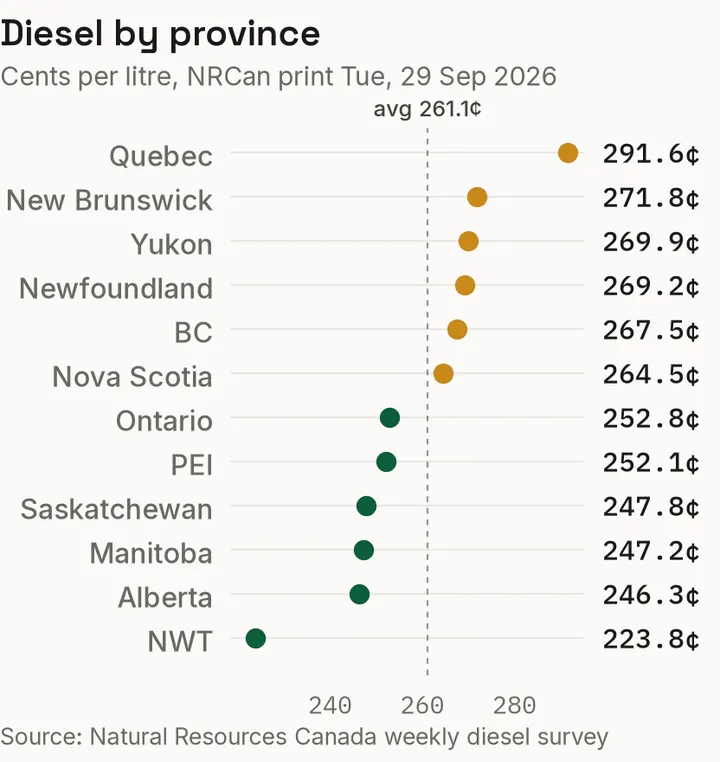
Provincial diesel prices against the national index, per the NRCan weekly survey.
Those rates are what each jurisdiction charges when your trucks burn fuel there. Get the litres into the wrong province and the tax follows the error. The refund you were owed becomes the assessment you pay.
When the dollar and the receipt disagree
Cross-border carriers buy a lot of fuel south of the line, and it is priced in US dollars. The Canadian dollar sits at 1.4243 against the US dollar, weakening by 0.39% in the current print from the Bank of Canada Valet API. A weaker dollar makes every US gallon dearer to buy, but it does not change the litres on the receipt. The jurisdictions still want litres and kilometres, not dollars. Your currency conversion is a bookkeeping step, not a filing one, and it is where hand-built spreadsheets go wrong quietly.

The Canadian dollar against the US dollar, recent observations.
What compliance costs against what the penalty costs
The arithmetic of a clean filing is short. Tax owed is your litres in a jurisdiction times that jurisdiction's rate, less the tax you already paid there. Clean records turn that into an afternoon of data entry.
Now price the same task with bad records. The return still has to go out, but you are guessing at the two inputs the whole system trusts. The audit will not guess with you. It applies the jurisdiction's own consumption factors to your distance, and the result is their number, not yours.
Late filing is the smaller of the two problems, and it is still real. A late return carries a penalty plus interest, set by the base jurisdiction. The penalty is not a flat ticket. It is calculated against the net tax you owe, so a bigger quarter and a longer delay both push it higher. The exact rate schedule lives with your base jurisdiction and can differ between them. That is a number to get in writing from them, because it is not something a blog should hand you.
The larger exposure is the assessment that follows a failed reconciliation. It reaches back through the retention window and it lands with interest attached. A reporting habit that costs you an afternoon a quarter is the cheaper way to live.
What to fix before the next deadline
Write the IFTA licence number on every fuel receipt, or stop buying where the receipt cannot carry it.
Log distance by jurisdiction every day, especially the short crossings. One unlogged province is the finding that opens the rest.
Keep the receipts and the trip data for the full window the agreement sets. Years, not months.
Reconcile every quarter, close to the quarter. A year-end scramble is how errors survive long enough to reach the audit.
Watch the border clock when you plan lanes. Peace Bridge at 13 minutes and Queenston-Lewiston at 7 are the current pressure points. The border trends page tracks waits crossing by crossing.
The IFTA filing deadlines Canada works from do not move, and the calendar for the next quarter is already set. What you control is the record behind the number. If your fuel and distance data can survive an audit, the deadline is just a date. If it cannot, no filing date is early enough.
Run your own lane arithmetic on the fuel cost calculator. Quebec's diesel page shows what the top of the range looks like before you commit to a rate.
Sources: Natural Resources Canada weekly diesel survey, Bank of Canada Valet API, Canada Border Services Agency (CBSA). Methodology: https://dashboard.northernmilemedia.com/methodology/nmdi/